
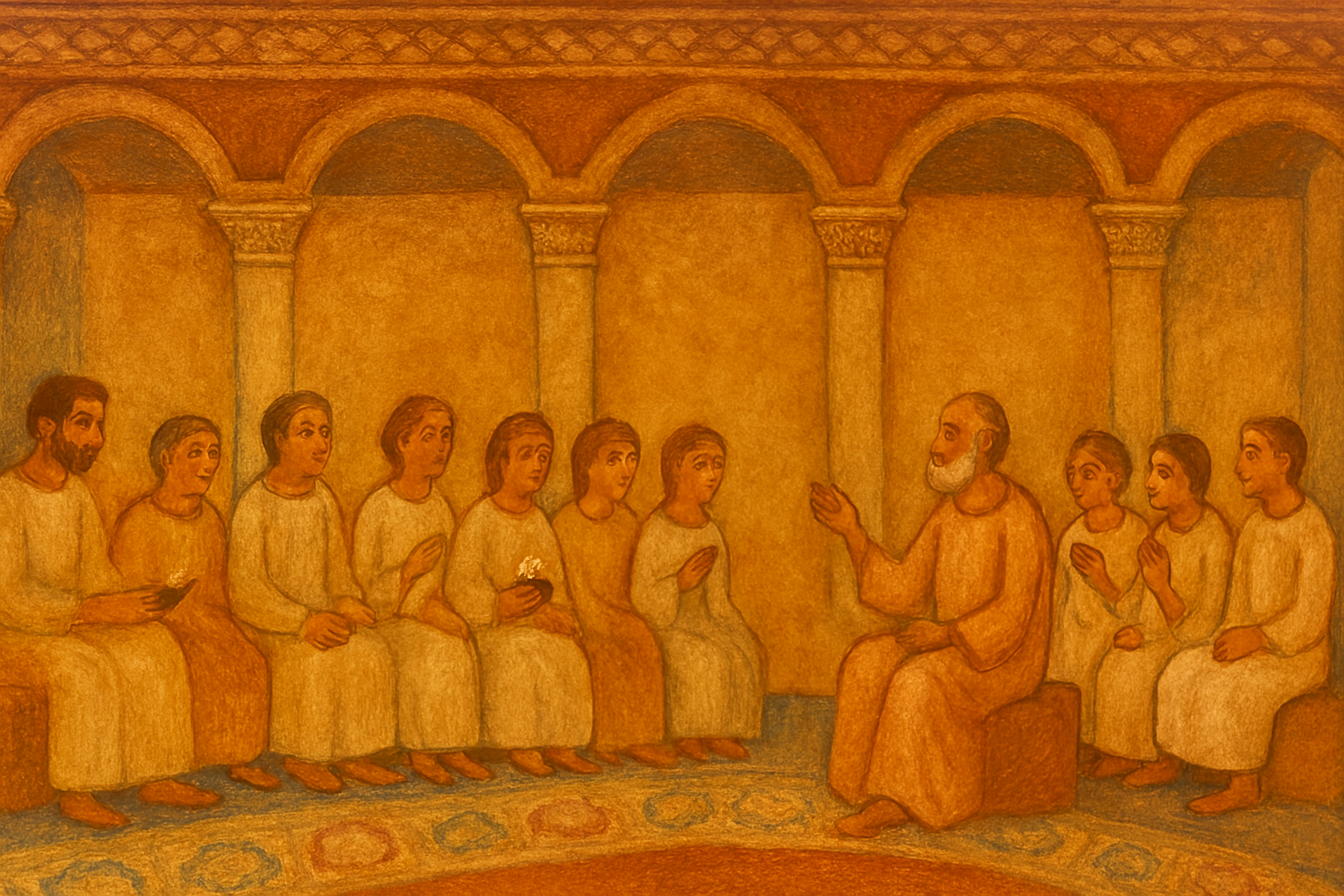
One of the most common questions about Christmas is why it is celebrated on December 25. Historical evidence shows that early Church Fathers recognized and supported this date as the day to commemorate Christ’s birth. Clement of Alexandria (c. 150–215 AD) wrote that Christians honored Christ’s nativity with joy and devotion, demonstrating early awareness of a fixed celebration. Similarly, Hippolytus of Rome (c. 170–235 AD) explicitly mentioned December 25 as the date of Christ’s birth in his Commentary on Daniel, stating that the calculation aligned with Jewish traditions concerning prophetic timelines.
Reasoning Behind the Date
The selection of December 25 was not arbitrary. Early Christians considered Jewish traditions and theological significance. The integral age hypothesis, for example, held that prophets’ lives began and ended on the same date. Following this reasoning, if Jesus was conceived on March 25 (the Feast of the Annunciation), then December 25 would naturally mark His birth nine months later. Church Father John Chrysostom (c. 347–407 AD) affirmed the celebration, emphasizing that honoring the incarnation was essential for Christian devotion and teaching.
ATTENTION! I want to alert you to my Free booklet of 15+ Christmas myths! Check it out and tell me what you think. Grab yours by clicking the below link and I’ll also send you the latest iApologia updates!
15+ Myths of Christmas the Bible Doesn’t Teach
Historical Context and Continuity
The continuity of Christian observance is significant. References in the Apostolic Constitutions indicate that by the fourth century, churches throughout the Roman Empire were consistently celebrating Christ’s birth. These celebrations were distinct from pagan festivals, with a clear focus on Scripture, worship, and the narrative of salvation. Early Christians were careful to differentiate their practices from the surrounding Roman culture, emphasizing that the timing and meaning of the celebration were grounded in prophecy and faith rather than cultural imitation.
Distinguishing Christian Practice from Pagan Festivals
While critics sometimes claim that December 25 coincides with pagan festivals like Sol Invictus or Saturnalia, the date was already in use by Christians as early as AD 202, well before the establishment of these Roman festivals. Church Fathers were aware of cultural overlaps and intentionally framed the celebration to focus on Christ. The goal was not to adopt pagan customs but to honor the theological significance of the nativity. Writers such as Clement, Hippolytus, and Chrysostom emphasize the spiritual meaning of Christ’s birth rather than any external cultural influence. This demonstrates that the Church’s choice of December 25 was rooted in careful theological reasoning and early Christian tradition.
Conclusion
Christmas has deep roots in early Christian tradition. Early Christian writings show that by the early third century, December 25 was recognized in Christian communities as the date to celebrate Christ’s birth. Hippolytus of Rome (c. AD 202) explicitly records December 25 in his Commentary on Daniel. Clement of Alexandria (c. AD 195) mentions efforts by Christians to calculate the date of Jesus’ birth, showing that the early Church was actively interested in commemorating the incarnation. John Chrysostom later affirms the theological importance of the nativity without referencing pagan influence. The choice of December 25 reflects early Christian theological reasoning, including the symbolic connection between Jesus’ conception on March 25 and his birth nine months later. This “integral-age” tradition demonstrates that the date was chosen based on internal Christian calculation and reflection rather than as a response to pagan festivals. By separating Christian celebration from pagan practices, the Church ensured that the observance remained centered on Christ. Understanding the perspectives of the Church Fathers strengthens the believer’s confidence in celebrating Christmas as a meaningful and historically grounded feast.
I would love for you to come along with me and not miss a post! In the future, I plan on giving more resources and answers. Plus, I want to send you a Free Quick Guide why I think science points to God. I would love for you to have this Free Quick Guide and the latest posts straight to your inbox. Please grab your Free Quick Guide why I think science points to God here.
So, what did you think? Feel free to share your thoughts below!
