
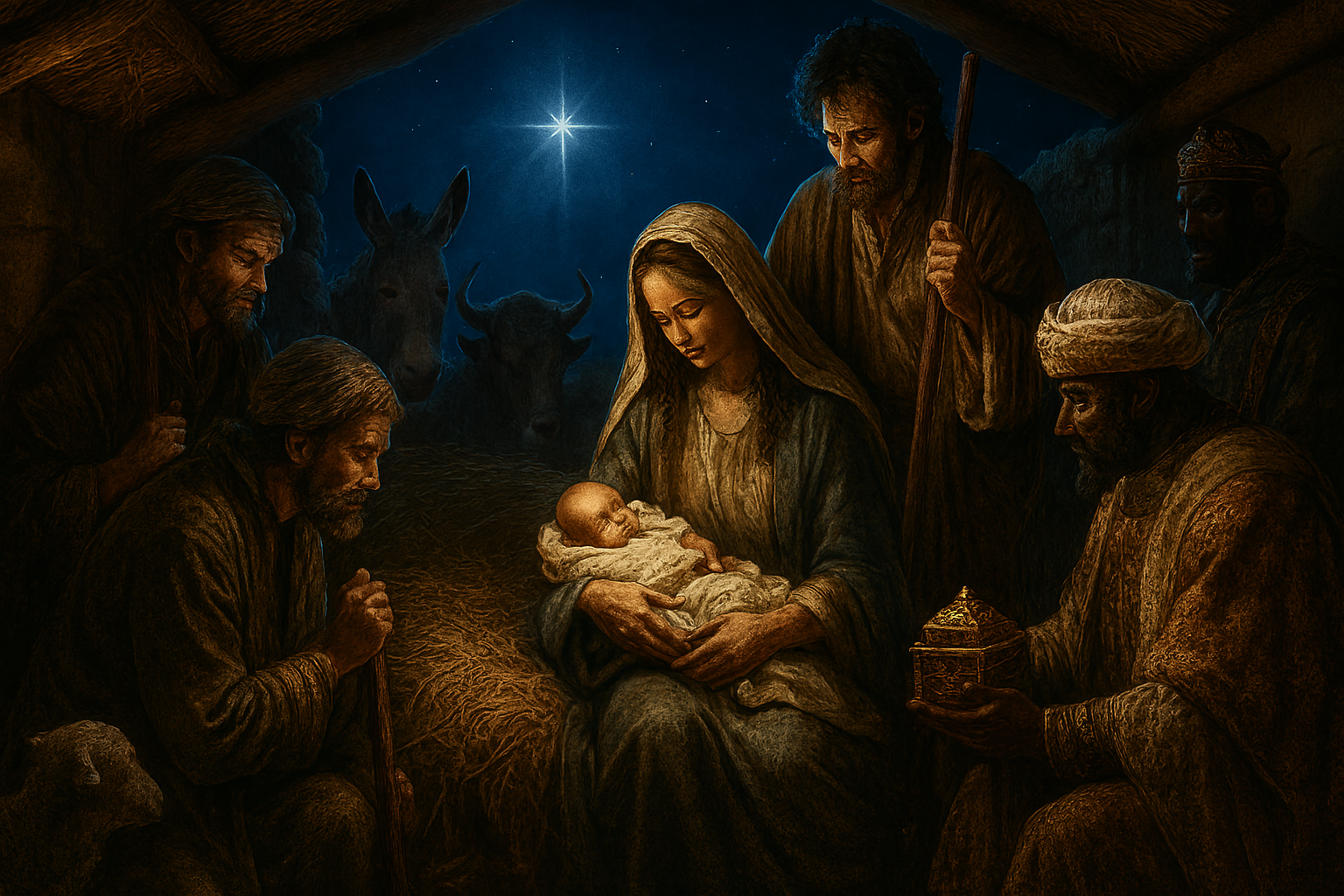
Many Christians wrestle with the question of whether it is appropriate to celebrate Christmas. Some feel indifferent and simply choose not to participate. Others object, claiming that Christmas is inherently wrong because it allegedly originates from pagan festivals. It is important to make a distinction. Personal conviction about a holiday is one thing. Declaring it sinful or un-Christian without proper understanding is something else entirely.
The Bible provides guidance for navigating these differences. In Romans 14, Paul emphasizes that Christians are free to make personal decisions regarding certain practices and that these choices should not become a basis for judgment. Verse 5 states, “One person considers one day more sacred than another; another considers every day alike. Each of them should be fully convinced in their own mind.” This principle highlights the importance of respecting differing convictions among believers while maintaining unity.
Early Christian Recognition of Christ’s Birth
Historical evidence demonstrates that early Christians did care deeply about Christ’s birth and gave serious thought to commemorating it. By at least AD 202, Hippolytus of Rome identified December 25 as the date of Jesus’ birth. In his Commentary on Daniel, he explicitly references this date, predating the earliest evidence of pagan festivals such as Sol Invictus being celebrated on the same day. This shows that the Christian celebration of Christ’s birth existed independently of Roman cultural influence.
Clement of Alexandria, writing around AD 195, also refers to efforts by Christians to calculate the dates of Jesus’ birth and conception. The logic behind December 25 is closely connected to what historians call the integral-age tradition. This reasoning placed Christ’s conception on March 25, which was also associated with the date of the Passion. Counting nine months forward gives December 25 as the date of His birth. The choice of this date was deeply theological, symbolic, and grounded in Jewish and Christian understanding rather than arbitrary or simply copied from pagan traditions.
Church Fathers like John Chrysostom reinforced this Christ-centered focus. Their writings emphasize the theological significance of the incarnation rather than the influence of surrounding pagan culture. Christmas, from its earliest recognition, was a celebration of Christ, His incarnation, and God’s plan of salvation for the world.
ATTENTION! I want to alert you to my Free booklet of 15+ Christmas myths! Check it out and tell me what you think. Grab yours by clicking the below link and I’ll also send you the latest iApologia updates!
15+ Myths of Christmas the Bible Doesn’t Teach
The Misconception of Pagan Origins
Some critics argue that December 25 was chosen to align with pagan festivals such as Saturnalia or Sol Invictus, and that Christians are therefore celebrating a “pagan holiday.” Historical evidence does not support this claim. Not one early Christian writer, including Clement, Hippolytus, or Chrysostom, states that the date was adopted to Christianize Roman festivals. The alignment, if it existed, was incidental and secondary to the internal theological reasoning of the Church.
Even if December 25 coincidentally overlapped with pagan celebrations, objecting to Christmas solely on that basis would be committing the genetic fallacy, which judges something wrong solely because of its origins. In reality, taking a day associated with pagan people and redirecting it to honor Christ would be an extremely Christian thing to do. This is entirely consistent with Jesus’ ministry, which transformed the lives of people steeped in non-Christian traditions. Redeeming a cultural date to focus on Christ is an act of evangelistic and spiritual conversion, turning the calendar itself toward worship, reflection, and teaching rather than pagan idolatry.
Freedom of Conscience and Personal Conviction
Christians today are free to observe or abstain from Christmas. The freedom to act according to conscience is a biblical principle. Celebrating with intention, reflection, worship, and generosity is consistent with Christian values. Conversely, abstaining out of personal conviction is also valid. What matters is not merely the form of the practice, but the heart and intent behind it.
Romans 14 provides a clear framework. Christians are encouraged to:
-
Respect the decisions of others.
-
Keep Christ at the center of all observances.
-
Avoid legalism or imposing personal convictions on others.
These principles maintain unity within the body of Christ and prevent unnecessary disputes. Observing Christmas responsibly or abstaining faithfully both align with God’s guidance for freedom and conscience.
Practical Considerations for Celebration
Even today, Christians can celebrate Christmas in ways that honor Christ and reflect thoughtful intention. Examples include:
-
Attending or hosting nativity services and events with a focus on worship and teaching.
-
Exchanging gifts as a reflection of the gifts brought to Jesus by the Magi.
-
Decorating with lights, wreaths, or evergreen symbols as reminders of Christ as the Light and Eternal Life.
-
Sharing generosity, community, and hospitality in ways that point to God’s love rather than merely following cultural trends.
Understanding the biblical, historical, and theological context ensures that these practices are meaningful and spiritually edifying.
Conclusion
Christmas has a rich foundation in early Christian thought, theology, and pastoral care. Historical evidence shows that Christians from the second and third centuries cared deeply about commemorating Christ’s birth. The date of December 25 emerged from theological reflection, Jewish prophetic tradition, and symbolic reasoning, not from pagan imitation.
Even if the date coincidentally aligns with a secular or pagan festival, redeeming it to honor Christ is fully appropriate and consistent with the freedom and creativity God calls believers to exercise. Observing Christmas with intention, focus, and heart is a historically grounded, biblically responsible, and spiritually meaningful way to celebrate the incarnation of Jesus.
I would love for you to come along with me and not miss a post! In the future, I plan on giving more resources and answers. Plus, I want to send you a Free Quick Guide why I think science points to God. I would love for you to have this Free Quick Guide and the latest posts straight to your inbox. Please grab your Free Quick Guide why I think science points to God here.
So, what did you think? Feel free to share your thoughts below!
