
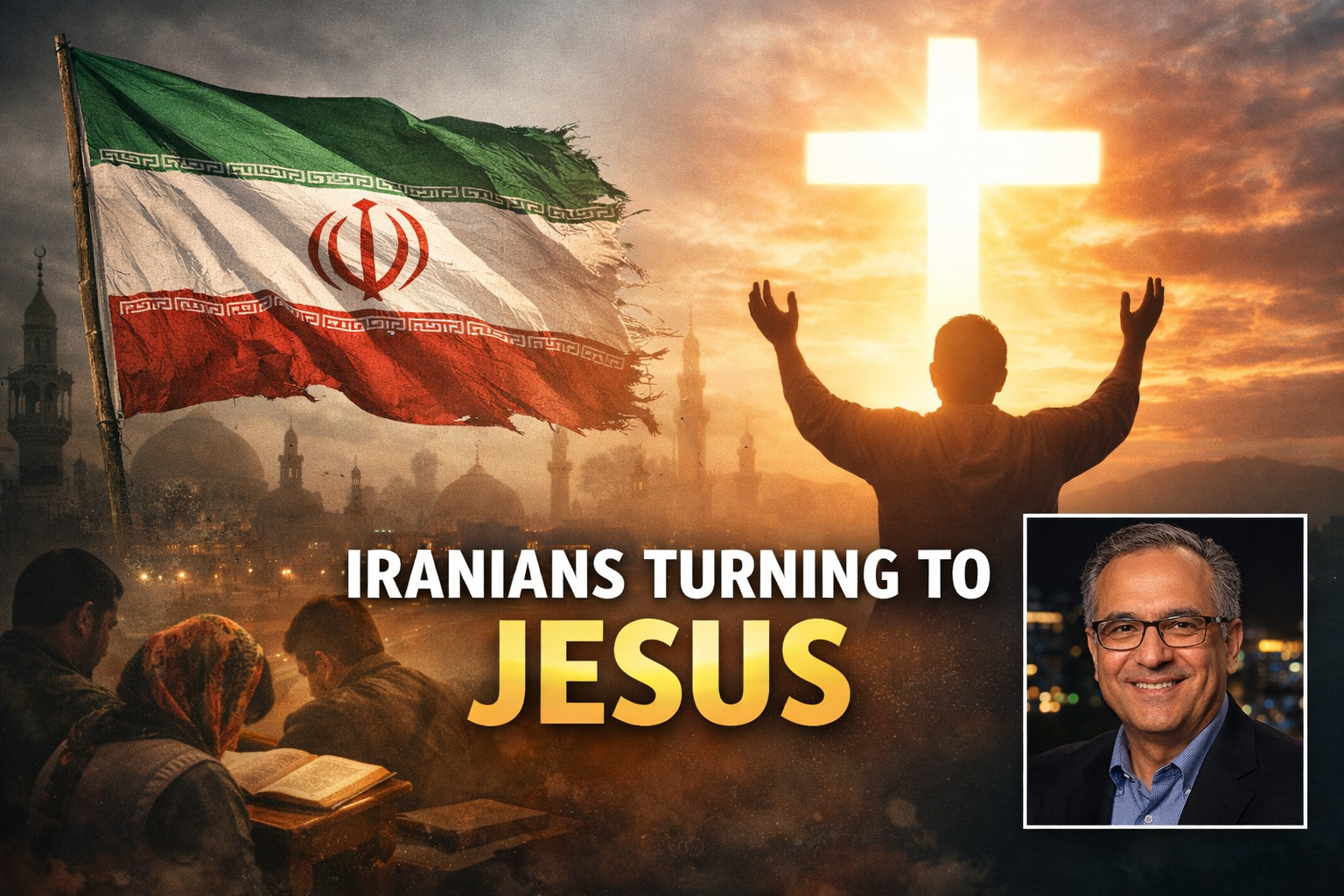
In a recent eye-opening interview on The Sean McDowell Show titled “Iran Is No Longer Islamic | Why Iranian Muslims Are Turning to Jesus” (February 2026), Hormoz Shariat—often called the “Billy Graham of Iran” and founder of Iran Alive Ministries—shared a bold and hopeful perspective on the spiritual transformation unfolding in his homeland.
Drawing on decades of frontline ministry, reports from underground believers, and credible surveys, Shariat argues that Iran is experiencing a profound rejection of Islam while Christianity grows rapidly despite persecution.
“Iran Is No Longer an Islamic Nation”
Shariat does not soften his words.
“Iran is no longer an Islamic nation and it will never be… Islam has experienced its greatest defeat in its history in Iran today. Islam is done in Iran.”
His claim is based not only on ministry reports but also on survey data and firsthand testimonies from believers inside the country.

What Surveys of Iranians Are Showing
Shariat referenced a large scientific survey conducted around 2020–2021 by researchers connected with European universities. The survey included responses from more than 50,000 Iranians and produced striking results.
According to the findings:
- Less than one-third of Iranians said they believe in Islam.
- Roughly one-third said they do not believe in God or consider God unimportant.
- The remaining third reported searching for spiritual truth through paths such as New Age spirituality, Eastern religions, or Christianity.
Many of those seekers, according to Shariat, are eventually finding their way to Christ.
But he also believes the shift has accelerated even more since the survey was conducted.
Growing Disillusionment With Islam
Shariat argues that four decades under the Islamic Republic have deeply disillusioned many Iranians.
He estimates that fewer than 10% of Iranians today truly believe in or view Islam positively as “the way.”
The reason, he says, is that people have witnessed the real-world effects of the system:
- corruption
- repression
- violence
- economic collapse
As Shariat describes it:
“The people of Iran have rejected Islam… the problem is with Islam itself.”
Many Iranians, he says, have concluded that the issue is not merely political leadership but the religious system itself.
Youth Attitudes Toward Christianity
Shariat also cited a more recent survey conducted inside Iran by a secular research company focusing primarily on young people ages 15–30.
The results were dramatic:
- 82% reported a very negative view of Islam
- 94% reported a positive view of Jesus and Christianity
Even among those who have not converted, the figure suggests a widespread openness toward the person of Christ.

Explosive Growth of Christianity
On the Christian side, Shariat reports remarkable growth among Muslim-background believers.
Earlier surveys estimated roughly 1.3 million converts to Christianity in Iran. However, Shariat believes the real number today is much higher.
His current estimate:
- At least 3 million Christians from Muslim backgrounds
- Possibly many more.
Underground church leaders inside the country often challenge lower estimates.
As some have told him:
“Pastor Hormoz, why do you downplay what God is doing here? There are many more.”
The Role of Media and Satellite Broadcasting
One of the surprising drivers of this movement is media.
Through satellite broadcasts and digital outreach, Shariat’s ministry has documented over 120,000 conversions by name.
Satellite television plays a major role because it bypasses the Iranian regime’s censorship. People secretly watch Christian programming in their homes, often encountering the gospel long before meeting another Christian.
Shariat describes meeting taxi drivers or shoppers who recognize his program and excitedly say something like:
“I’ve been a Christian for six months… I came to Christ watching your program.”
Crisis Often Precedes Revival
According to Shariat, waves of conversion often follow moments of national trauma.
After major crackdowns, killings, or massacres by the government, he frequently sees a surge of people responding to the gospel.
He compares it to peeling an onion: each crisis strips away another layer of attachment to Islam and opens hearts to something new.

Dreams, Visions, and Personal Encounters
Many testimonies include reports of dreams and visions of Jesus.
Shariat says people frequently describe encounters where Christ appears to them, heals them, or calls them to follow Him.
Some believers claim dramatic healings—including from serious illnesses—after such experiences. For many, these encounters produce a willingness to suffer or even die for their faith.
Persecution Has Not Stopped the Movement
Despite the growth, persecution remains severe.
Christians in Iran face:
- arrests
- surveillance and spyware
- home raids
- imprisonment
Shariat reports that executions and killings continue to occur regularly.
Yet instead of extinguishing the movement, persecution appears to strengthen it.
Shariat’s Personal Story
Shariat’s passion is deeply personal.
Born a Muslim in Iran, he began studying the Quran as a teenager. The more he studied, the more troubled he became by what he saw as a distant and violent picture of God.
Later, while living in Los Angeles, he heard a simple presentation of the gospel and became a Christian.
Soon afterward, tragedy struck his family. His teenage brother was arrested at 16 and executed at 18 by the regime.
Rather than producing bitterness, the loss deepened Shariat’s love for Muslims and his desire to share the gospel.
For years he prayed that one million Iranians would come to Christ—a prayer he now believes God is answering.
A Prophetic Hope for Iran
Shariat also connects the spiritual movement in Iran to a biblical passage.
He points to Book of Jeremiah 49, where God promises to set His throne in Elam, an ancient region located in modern-day Iran.
Shariat believes this passage foreshadows a future spiritual revival in the region.
His vision is that Iran could one day become a nation filled with house churches and Christian communities ready to flourish if religious freedom arrives.
A Nation in Spiritual Transition
Official Iranian government statistics still claim that 98–99% of the population is Muslim, mostly Shiite.
However, independent research paints a more complicated picture. For example, a widely discussed 2020 survey conducted by GAMAAN found that only about 32% of Iranians identified as Shiite Muslims, with many identifying as secular, atheist, spiritual, or followers of other religions.
Shariat’s ministry reports and the testimony of underground believers add another dimension to this story: a growing movement toward Christianity happening quietly beneath the surface.
A Reason for Prayer and Hope
Whether the exact numbers are debated or not, there is little doubt that Iran is undergoing significant spiritual change.
For Christians watching around the world, the story offers both encouragement and responsibility.
It is a reminder that even in places where the gospel is restricted and believers suffer persecution, God is still at work.
I would love for you to come along with me and not miss a post! In the future, I plan on giving more resources and answers. Plus, I want to send you a Free Quick Guide why I think science points to God. I would love for you to have this Free Quick Guide and the latest posts straight to your inbox. Please grab your Free Quick Guide why I think science points to God here.
So, what did you think? Feel free to share your thoughts below!
